

Hair transplantation using the FUE (Follicular Unit Extraction) technique is considered one of the most advanced and effective methods available today. This technique represents a significant advancement in the field of hair restoration, as it addresses the issue of scarring that can occur with some other hair transplant methods. Previously, such scarring was a major obstacle preventing many individuals from undergoing hair restoration procedures. Both doctors and patients prefer FUE hair transplantation because it delivers reliable and effective results. One of the key advantages of this method is that it does not involve any incisions in the scalp, making it a safe and trustworthy option in the field of hair restoration.
What is FUE Hair Transplantation
Hair transplantation using the FUE (Follicular Unit Extraction) technique is considered an ideal solution for restoring lost hair without the need for major surgery or leaving noticeable scars. This method involves extracting hair follicles from a donor area on the scalp and carefully implanting them into the balding area, all under local anesthesia.
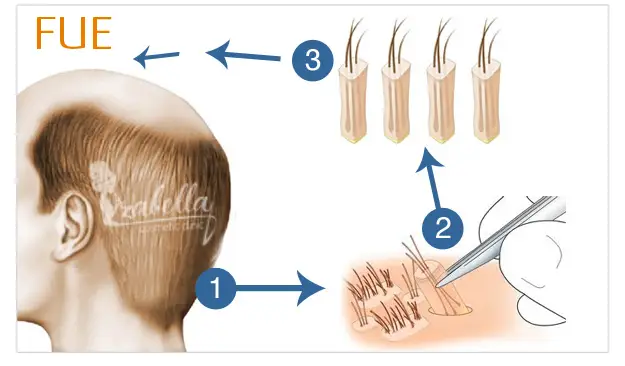
How is FUE Hair Transplant Performed
The FUE hair transplant procedure is carried out through several steps, which include:
- Photography: The area to receive the transplant is photographed before the procedure and after recovery to compare the results.
- Identifying Donor and Recipient Areas: The donor area, where follicles will be extracted, and the recipient area, where the hair will be implanted, are clearly marked.
- Extraction Phase: Follicles are extracted from the donor area using a specialized device called a micro-punch. The device creates tiny holes in the scalp to remove the follicles without causing damage.
- Preparing the Follicles: Once extracted, the follicles are placed in special solutions that preserve their vitality and make the implantation process easier.
- Local Anesthesia: The recipient area is numbed with local anesthesia to prevent any pain during the procedure.
- Opening Channels: The doctor creates tiny openings in the scalp, sized to match the follicles being implanted.
- Implantation: The follicles are carefully implanted into the recipient area, one by one, using a device designed specifically for follicle placement.
These steps form the core of the FUE hair transplant procedure, ensuring natural hair restoration without leaving any scars.
FUE Hair Transplant Technique
The FUE technique, short for Follicular Unit Extraction, is a modern hair transplant method that involves individually extracting hair follicles from the donor area typically the back of the head using a precise tool. The extracted follicles are then implanted into areas affected by hair thinning or loss, helping to restore hair naturally and accurately without leaving visible scars.
Advantages of FUE Hair Transplant
- Short recovery time: FUE offers a relatively quick recovery compared to traditional hair transplant methods, allowing patients to return to their daily routines sooner. The procedure usually takes one day, while other methods, such as the strip technique, can take two days or more.
- Minimal scarring: FUE leaves very small, nearly invisible scars on the scalp, as it does not require removing a strip of skin. This makes it an ideal choice for those who prefer short hairstyles or want natural-looking, discreet results.
- No large wounds or surgical stitches: FUE relies on the precise, individual extraction of hair follicles, which avoids major scalp wounds. This reduces bleeding, speeds up healing, and provides a more comfortable experience for the patient.
- Easy graft preparation and minimal equipment needed: The technique allows for straightforward preparation of hair grafts without complex tools, making the procedure more efficient and easier for the surgeon to perform.
- Less invasive procedure: FUE is less invasive and generally less painful than other hair transplant methods, making it suitable for patients concerned about surgery or seeking a more comfortable experience.
- Smaller medical team required: Due to its precision, FUE requires a smaller medical team compared to other transplant techniques, which helps reduce the overall cost and improves efficiency.
- Lower cost per session: FUE is relatively affordable compared to some other hair transplant techniques, making it an accessible option for patients looking for effective and reasonably priced solutions for hair loss.
Drawbacks of FUE Hair Transplantation
- Long duration of the procedure: Hair transplantation using the FUE technique can be time-consuming, especially when a large number of follicles need to be transplanted. A single session may take between 4 to 8 hours, and the patient might require multiple sessions to achieve the desired results. This can be inconvenient for those seeking a quick solution to hair loss.
- Limitations on the number of extractable follicles: FUE relies on harvesting hair follicles from the donor area, which has a limited supply. This may not be sufficient for patients with extensive baldness, as there may not be enough follicles to achieve the desired density in the recipient areas.
- Risk of follicle damage: The FUE technique requires high precision and skill from the surgeon. Any mistake during the extraction or implantation process can damage the follicles, potentially leading to unsatisfactory results, such as poor hair growth or failure of the transplanted hair to grow.
- Risk of bacterial infection: As with any surgical procedure, there is a risk of bacterial infection following FUE hair transplantation. It is crucial to carefully follow post-operative instructions from the doctor, including proper hygiene and the use of prescribed antibiotics, to minimize the risk of infection.
Preparing for a Follicular Unit Extraction (FUE) Hair Transplant
The preparation steps for an FUE hair transplant are largely similar to other hair restoration techniques. Here are some key points to keep in mind before undergoing the procedure:
- Stop smoking: Refrain from smoking for at least three days prior to the procedure to reduce the risk of scarring and to promote faster healing.
- Avoid alcohol: Do not consume alcohol, even in small amounts, for at least a week before the procedure to prevent bleeding during or after surgery.
- Pause vitamins and supplements: It is recommended to stop taking vitamins, dietary supplements, blood thinners, and anti-inflammatory medications such as ibuprofen or naproxen at least 15 days before the procedure.
- Avoid ointments and herbal supplements: Refrain from using topical ointments or herbal supplements for two weeks prior to the surgery.
- Protect from the sun: Avoid direct sunlight and wear a hat or scarf when outdoors.
- Scalp massage: Gently massage the scalp for 15 to 30 minutes daily for several weeks before the procedure to improve blood circulation.
- Inform your doctor: If you are using any medications for hair loss, notify your doctor, as they may advise you to pause or adjust the dosage prior to surgery.
- Avoid altering your hair: Do not dye, cut, or shave your hair for at least a month before the procedure.
- Use a specialized shampoo: Preferably use a paraben-free shampoo when washing your hair.
- Prepare for post-operative days: Purchase any necessary medications, dressings, a loose-fitting hat, an extra surgical cap, and appropriate shampoo and conditioner, such as baby shampoo, before the procedure, as you may need to stay home for a few days after surgery.
Also read: The largest hair transplant centers in Cairo
Suitable Candidates for FUE Hair Transplant
- Patients with mild hair loss: The FUE technique is ideal for individuals with androgenic hair loss or those looking to transplant eyebrows, mustaches, or cover small bald areas caused by skin conditions.
- Short-haired individuals: FUE leaves minimal scarring, making it suitable for those who prefer to keep their hair short.
- Patients with scars: FUE can be used to cover scars resulting from skin conditions, trauma, or injuries.
- Patients concerned about pain or scarring: FUE is an excellent option for those who are anxious about pain or scars, as it is performed under local anesthesia and does not leave significant marks.
- Athletes: Sports enthusiasts can resume their activities shortly after undergoing an FUE hair transplant.
Unsuitable Candidates for FUE Hair Transplant
- Insufficient donor hair: FUE relies on the availability of a sufficient amount of healthy hair in the donor area.
- Reluctance to undergo long sessions: An FUE session can take several hours, so it may not be suitable for those unwilling to commit to long procedures.
- Women who do not wish to shorten their hair: FUE requires shaving the donor area, which may not be acceptable for women who prefer not to cut their hair.
Also read: Patterns of Genetic Hair Loss in Women
Is FUE Hair Transplant Safe
This procedure is generally considered very safe, with only minor side effects such as mild swelling and bruising. Small white scars may appear at the graft extraction sites, but these typically fade on their own within a few days.
After an FUE hair transplant, you can leave the clinic immediately and resume your normal activities, provided you follow some basic care guidelines. However, it is generally recommended to consult your doctor if you notice any of the following signs after the procedure:
- Signs of infection at the transplant site, such as discharge or crust formation.
- Pain, swelling, or bleeding at the surgical area.
- Numbness or tingling in the operated region.
Number of Hair Transplant Sessions Using the FUE Technique
While a single session may be sufficient for some patients, others might require multiple sessions to achieve the desired results.
This depends on several factors:
- The size of the area that needs hair transplantation.
- The number of follicles required.
- The desired hair density.
- The donor area’s ability to provide sufficient follicles.
In the first session: the maximum possible number of follicles is transplanted.
In the following sessions: additional follicles are transplanted to achieve the desired density.
Rest period between sessions: ranges from 3 to 6 months, allowing the donor area to recover.
Consultation with a specialist: is essential to determine the number of sessions required, based on each patient’s individual needs.
Are the results of FUE hair transplantation guaranteed and permanent
It is natural to be concerned about the results, especially with the modern FUE technique. Some hair shedding may occur during this period, particularly in the first three months. There is no need to worry, as this is normal.
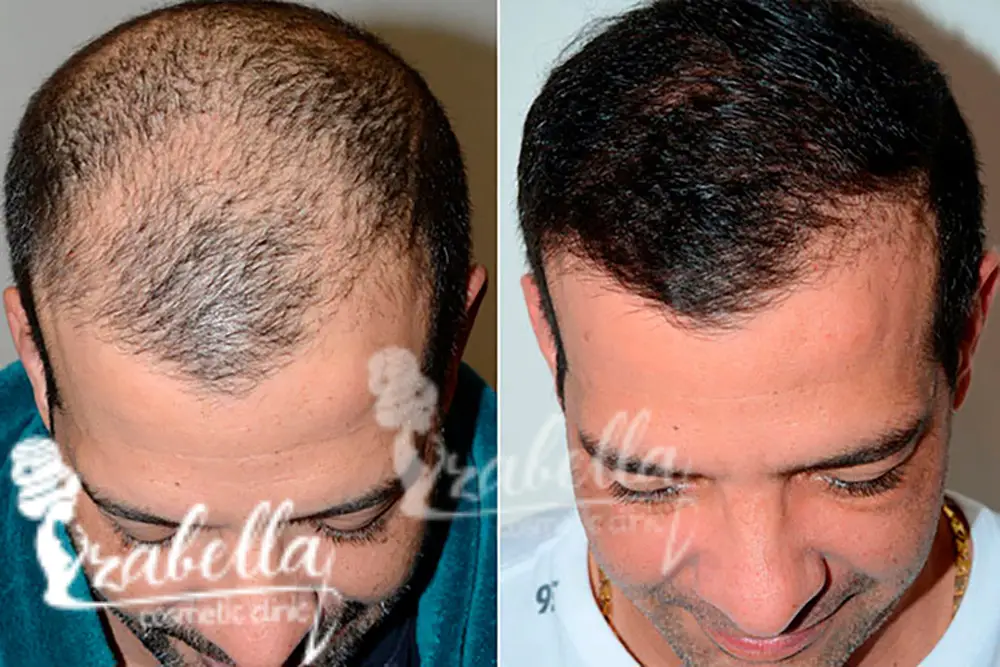
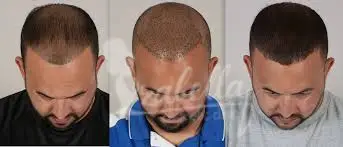
- Guaranteed results: When performed efficiently by experienced doctors, FUE hair transplantation provides reliable and long-lasting results.
- Changes with aging: The ability of follicles to produce hair decreases with age. This applies to both transplanted and natural hair.
Post-Operative Instructions After FUE Hair Transplant
After undergoing a hair transplant using the FUE technique, there are important guidelines for post-surgery hair care for both men and women. Initially, you may experience some discomfort in the scalp for a few days. For this reason, your doctor will prescribe medications and pain relievers that should be taken according to the recommended schedule.
Following this, certain precautions should be observed to ensure the success of the procedure and maintain the health of the transplanted hair. These include:
- Avoid using blood thinners for at least two weeks to prevent bleeding.
- Refrain from consuming alcohol for two weeks after the surgery.
- Completely avoid smoking for one month to accelerate the healing process.
- Use only the shampoos prescribed by your doctor when washing your hair, starting three to four days after the surgery.
- Avoid touching or scratching the transplanted hair to protect the follicles.
- Stay out of direct sunlight during the first few weeks after the procedure.
- Avoid strenuous exercises such as weightlifting and boxing during the first month after surgery.
- Follow a healthy diet to speed up recovery.
By adhering to these guidelines, you can achieve satisfactory results and accelerate the healing process after an FUE hair transplant.
Tips for Maintaining Hair Transplant Results
- Follow your doctor’s post-operative instructions carefully.
- Take prescribed medications as directed.
- Maintain a healthy diet.
- Avoid smoking.
- Protect your hair from sun exposure.
Consultation is Essential: Consult a specialist to determine whether the FUE technique is suitable for you, and discuss your expectations and desired results with your doctor. With proper care, you can enjoy the results of your hair transplant for many years.
Price of Hair Transplant Using the FUE Technique
The cost of an FUE hair transplant depends on several factors, making it difficult to specify a fixed price in advance. Typically, the doctor evaluates each patient’s condition and determines the final cost according to specific circumstances. The main factors that influence the cost of an FUE hair transplant include:
- The degree of baldness and hair loss.
- The number of grafts needed in the target areas.
- The surgeon’s fees and the clinic team’s charges.
- The use of advanced tools and techniques during the procedure.
- The cost of post-surgery medications to support hair growth.
Based on these factors, the cost of an FUE hair transplant is determined individually. Patients should consult a specialist doctor to get an accurate estimate based on their personal case.
If you are looking for detailed information about hair transplant costs in Egypt, you can check our dedicated article covering everything you need to know about the expenses.
Why Choose Follicular Unit Extraction (FUE) Hair Transplant
Follicular Unit Extraction (FUE) is one of the most preferred and effective methods for achieving desired results in hair transplantation. Beyond its popularity, FUE is highly regarded by most patients due to its outstanding therapeutic outcomes.
FUE is often the first technique that comes to mind when considering hair transplantation. Its key advantage is that it leaves no visible scars on the back of the head, making it beneficial both during the procedure and throughout the recovery period. The main reason patients prefer FUE is the absence of any surgical incision marks.
Reasons for FUE Hair Transplant Failure
The failure rate for FUE hair transplants is less than 10% and can be attributed to several factors, including:
- Psychological stress: Anxiety and tension can negatively affect the results of the procedure.
- Unhealthy lifestyle: Failing to maintain a healthy lifestyle may hinder the success of the transplant.
- Insufficient scalp care: Neglecting proper scalp care after the procedure can lead to transplant failure.
- Smoking: Smoking is known to adversely affect the outcomes of hair transplantation.
- Certain medications: Some medications may interfere with the success of the transplant.
- Choosing an unqualified surgeon: Relying on an inexperienced cosmetic surgeon may reduce the chances of success.
- Poor nutrition: Deficiencies in essential nutrients can impact the effectiveness of the transplant.
Hair Transplant for Women Using FUE
Women experiencing hair loss can also benefit from FUE hair transplantation. However, a thorough analysis of the patient’s hair is necessary to determine whether this method is suitable. It is important to note that transplanting fine hair in women can be more complex. Therefore, the surgeon must have advanced skills and extensive experience, and the medical team should be qualified and competent. Without these conditions, hair follicles may suffer permanent damage.
Do I need to shave my head before a hair transplant
Usually, yes. However, it’s best not to do anything before arriving at the clinic, as the specialists will perform any necessary preparatory steps if needed.
Will hair grow back in the donor area
Technically, the hair follicles removed from the donor area will not grow back. However, thanks to advanced techniques like FUE and DHI, there will be no noticeable difference in the donor area after healing, unlike the FUT method.
Is anesthesia necessary for a hair transplant
Yes, local anesthesia is applied to the scalp before the procedure. You will be awake during the transplant, but you won’t feel any pain in the scalp for a certain period after the procedure.

